


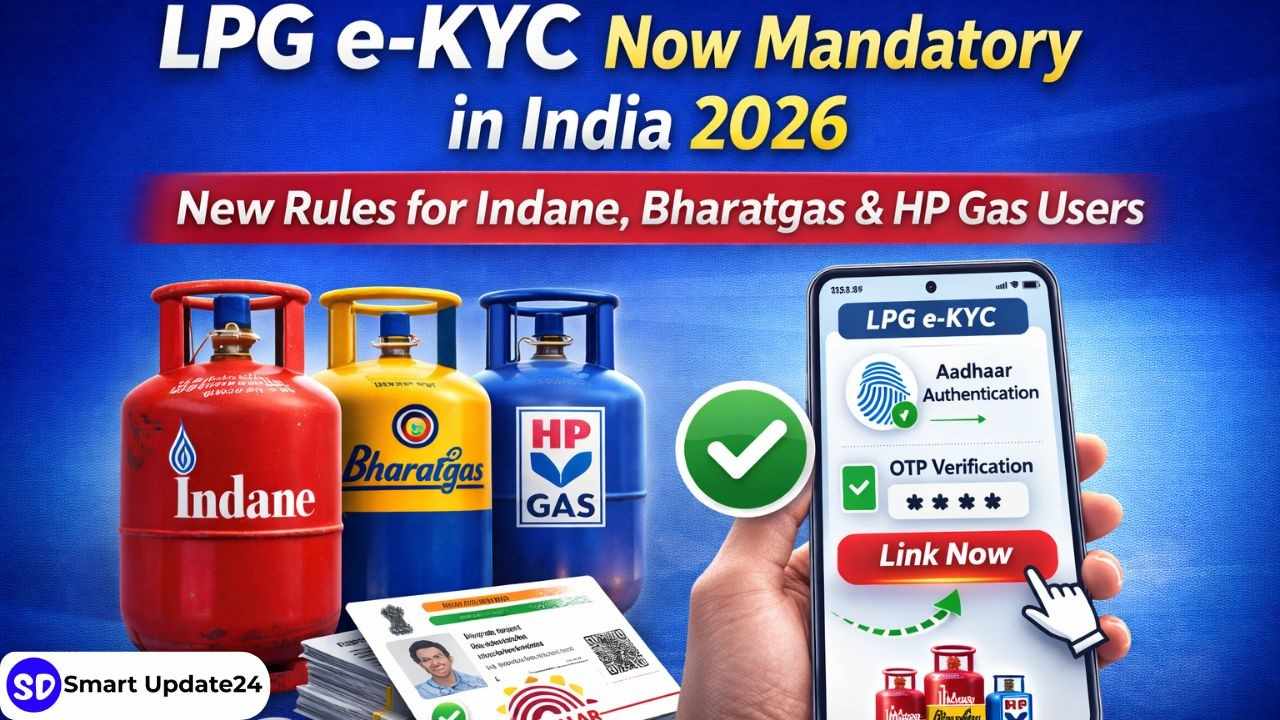
LPG e-KYC Now Mandatory in India 2026: India has introduced mandatory Aadhaar-based e-KYC for all domestic LPG consumers, a move aimed at improving transparency and managing supply during global energy disruptions. The rule applies to customers of major LPG distributors, including Indian Oil Corporation (Indane), Bharat Petroleum (Bharatgas), and Hindustan Petroleum (HP Gas).
In light of supply shortages stemming from tensions in West Asia, India has made Aadhaar-based LPG e-KYC mandatory for all domestic users. For households utilizing Indane gas, this will alter the process of booking refills, verifying identity, and scheduling deliveries. Himachal Pradesh has also mandated a 25-day interval between two bookings to ensure the equitable distribution of stock among all consumers.
The objective of these policies is to mitigate LPG shortages within India and safeguard supplies for essential domestic use. From an investor’s perspective, we may observe short-term fluctuations in the volumes, margins, and cash cycles of oil marketing companies; furthermore, commercial demand may remain subdued until logistical operations improve.
Mandatory e-KYC: What Do Households Need to Know? All domestic LPG customers—across Indane, Bharatgas, and HP Gas—are now required to complete Aadhaar-based verification. For Indane gas users, this entails linking your Customer ID with your Aadhaar number and registered mobile number. The aim is to eliminate duplicate accounts and ensure that deliveries reach only the intended recipient. Distributors are advising households to update their records as soon as possible to ensure that bookings and home deliveries continue without interruption, even after the stricter regulations come into effect.
The government’s decision comes at a time when global energy markets are facing pressure due to tensions in West Asia, which are affecting shipping routes and increasing transportation costs. By enforcing stricter identity verification and booking rules, authorities aim to ensure fair distribution and reduce the risk of shortages for domestic consumers.
Why LPG e-KYC Has Become Mandatory (NOW)
The new rule requires LPG users to link their customer ID with Aadhaar and a registered mobile number. The goal is to eliminate duplicate connections and make sure subsidized LPG reaches genuine households.
Authorities believe that the system will help:
- Remove duplicate or inactive LPG connections
- Ensure authentic customer verification
- Improve delivery tracking and booking accuracy
- Prevent misuse of subsidized domestic LPG
For millions of households that depend on LPG for cooking, completing e-KYC will soon become essential to continue receiving uninterrupted cylinder deliveries.
How to link LPG Users with e-KYC -Step-by-step process:
Consumers can complete the e-KYC process through several convenient methods.
Online Through OMC Apps or Websites
Customers can log in to the mobile app or official portal of their LPG distributor and complete Aadhaar authentication: https://www.pmuy.gov.in/e-kyc.html
Visit the Local LPG Distributor
Consumers may also visit their nearby LPG distributor with Aadhaar and registered mobile details to complete verification.
Assisted Service Centers
Some regions offer assisted digital kiosks where staff help customers complete the e-KYC process.
To finish verification smoothly, households should keep the following ready:
- Aadhaar card
- Registered mobile number
- Customer ID and address details
Ensuring that the mobile number linked with the LPG account is active will help customers receive OTP verification and booking notifications.
New 25-Day Booking Rule Introduced in Himachal Pradesh
In addition to the e-KYC requirement, the state of Himachal Pradesh has introduced a new LPG booking rule.
Under this regulation, consumers can book their next LPG cylinder only after 25 days from their previous booking date.
The aim of this rule is to:
- Prevent excessive or repeated bookings within short intervals
- Ensure fair cylinder distribution across households
- Reduce stock pressure on local distributors
For households in the state, this means planning refills slightly earlier and managing LPG usage carefully.
Impact on LPG Supply and Distribution
Global geopolitical tensions have disrupted shipping routes and increased insurance and freight costs for energy imports. Since India relies heavily on LPG imports, these challenges can sometimes slow supply movement.
Potential effects include:
- Slight delays in cylinder deliveries in certain areas
- Temporary pressure on distributor stocks
- Longer lead times for refills during supply disruptions
To manage these challenges, authorities are prioritizing domestic gas allocation for LPG production and enforcing booking discipline.
These measures are expected to stabilize supply and reduce the chances of severe shortages.
What LPG Consumers Should Do Now (LPG e-KYC Now Mandatory)
Households using LPG cylinders should take a few simple steps to avoid disruptions.
- Complete Aadhaar-based LPG e-KYC as soon as possible
- Confirm that the mobile number linked to the LPG account is active
- Plan cylinder bookings earlier, especially where booking intervals apply
- Keep one spare cylinder where possible to avoid emergency shortages
By updating their details and following booking rules, consumers can ensure smoother deliveries even during supply fluctuations.
Impact on Oil Marketing Companies
India’s oil marketing companies are also adjusting operations in response to these new rules and global supply pressures.
Key factors affecting the sector include:
- Changes in LPG booking patterns due to the 25-day rule
- Higher transportation and import costs
- Fluctuations in commercial LPG demand from restaurants and hospitality sectors
Companies such as Indian Oil Corporation, Bharat Petroleum, and Hindustan Petroleum are closely monitoring supply logistics, demand trends, and pricing dynamics.
Investors and analysts will be watching delivery timelines, stock levels at distributors, and any official updates on LPG pricing.
Frequently Asked Questions (FAQ)
1. Is LPG e-KYC mandatory in India in 2026?
Yes. The Government of India has made Aadhaar-based LPG e-KYC mandatory for domestic LPG users. Customers of Indane, Bharatgas, and HP Gas must complete verification to continue receiving LPG cylinder deliveries without interruption.
2. Which LPG companies require e-KYC?
The e-KYC rule applies to all major LPG distributors in India, including:
- Indane Gas
- Bharatgas
- HP Gas
All domestic LPG customers under these companies must link their LPG connection with Aadhaar.
3. Why has LPG e-KYC been made mandatory?
The government introduced LPG e-KYC to:
- Remove duplicate or fake LPG connections
- Ensure subsidies reach genuine consumers
- Improve LPG distribution efficiency
- Reduce misuse of domestic LPG cylinders
This helps maintain fair supply during periods of high demand or shortages.
4. How can I complete LPG e-KYC online?
You can complete LPG e-KYC online by following these steps:
- Visit the official website or mobile app of your LPG distributor.
- Log in using your LPG consumer ID or registered mobile number.
- Select the e-KYC or Aadhaar verification option.
- Enter your Aadhaar number.
- Verify using OTP sent to your registered mobile number.
- Submit the request and confirm verification.
5. Can LPG e-KYC be done offline?
Yes. LPG e-KYC can also be completed by visiting your nearest LPG distributor office. You need to carry:
- Aadhaar Card
- Registered mobile number
- LPG consumer number
The distributor will help you complete the verification process.
6. What documents are required for LPG e-KYC?
To complete LPG e-KYC, you usually need:
- Aadhaar Card
- LPG Consumer Number
- Registered Mobile Number
- Address details
These documents help verify the identity of the LPG customer.
7. What happens if LPG e-KYC is not completed?
If customers fail to complete LPG e-KYC, they may face:
- Delays in LPG cylinder booking
- Temporary suspension of delivery services
- Issues receiving LPG subsidy
Therefore, completing e-KYC as early as possible is recommended.
8. What is the new 25-day LPG booking rule?
In some states like Himachal Pradesh, customers can book their next LPG cylinder only after 25 days from the previous booking date. This rule helps prevent stock shortages and ensures fair distribution among households.
9. Will LPG prices change because of these new rules?
The e-KYC rule itself does not change LPG prices. However, LPG prices may vary depending on:
- International fuel prices
- Import costs
- Government policies
- Currency exchange rates
10. How can LPG users avoid delivery delays?
To avoid delays, LPG consumers should:
- Complete Aadhaar-based e-KYC
- Keep their registered mobile number active
- Book cylinders slightly earlier than usual
- Monitor distributor notifications
Following these steps helps ensure smooth LPG delivery.
Related Article: LPG Gas Booking via WhatsApp (12 March 2026) | Official Number Here -Book Your Cylinder Easily
