






Parasnath Jain Temple in Kolkata: Kolkata is known for its history, culture, and constant movement. But hidden within North Kolkata lies a place that feels completely different—calm, artistic, and almost transportive. The Parasnath Jain Temple, located near Gouri Bari, is one such destination that quietly stands out.
The moment you step inside, the noise of the city fades. What takes over instead is silence, symmetry, and a kind of beauty that doesn’t shout—it quietly impresses.
Kolkata, earlier known as Calcutta, has been a city of opportunity since its early days. Founded in 1690, it quickly grew into an important centre of trade under the British Empire. By the late eighteenth century, people from different parts of India and beyond started arriving here—traders, artisans, businessmen—each bringing their own culture, beliefs, and traditions. Over time, this mix of communities shaped the city’s identity. You can still see that influence clearly in its art, literature, and especially its architecture.
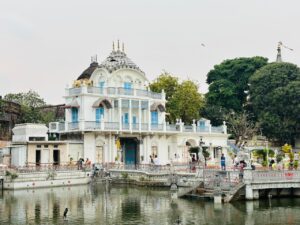
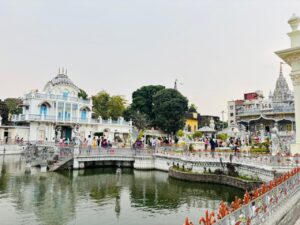
One of the most interesting examples of this cultural blend is the Swetambara Jain temple complex in the Manicktala area of Kolkata. Built during the second half of the nineteenth century, these temples were established by Jain families from the Johari Sath community, who had moved to the city in search of better opportunities.
What makes this temple complex stand out is its design. It does not follow a single architectural style. Instead, it reflects a thoughtful mix of traditional Jain elements and the European styles that were popular during British rule. The result is something unique—structures that carry religious significance while also showcasing the artistic influence of that period.
In a way, these temples tell a larger story. They are not just places of worship, but also reminders of how Kolkata evolved as a city shaped by different cultures coming together and leaving their mark.
How to Reach Parasnath Jain Temple, Kolkata
The Parasnath Jain Temple is located in North Kolkata, near Gouri Bari / Manicktala area. It’s well connected, so reaching here is quite easy from any part of the city.
By Metro
- Nearest metro stations: Belgachia or Shyambazar (Blue Line)
- From either station, the temple is about 5–2 km
- Take an auto or a short taxi ride (10–15 minutes)
If you prefer walking, it’s doable from Shyambazar, but a bit long.
By Train
- Nearest railway station: Sealdah
- Distance: around 4 km
- From Sealdah, you can take:
- Auto
- Bus
- Ola/Uber
Travel time: 15–25 minutes, depending on traffic
By Bus
- Get down at Manicktala or Ultadanga
- From there, take an auto to Gouri Bari Lane
- The temple is just inside the lane
By Car / Bike
- Search on Google Maps: “Parasnath Jain Temple Kolkata”
- Parking is limited near the entrance, so:
- Better to park slightly away and walk
- Avoid peak hours if driving
Exact Location
Area: Gouri Bari Lane, near Manicktala, North Kolkata
Landmark: Close to the Gouri Bari Durga Puja area
Google Map Location: https://maps.app.goo.gl/eGmdoxnMR18AYoAHA
Parasnath Jain Temple: A First Look That Stays With You
As you walk through the entrance lane, the experience begins even before reaching the temple. The pathway itself is decorated with intricate carvings and artistic details on both sides. There’s a sense of anticipation, like you’re about to enter something special.
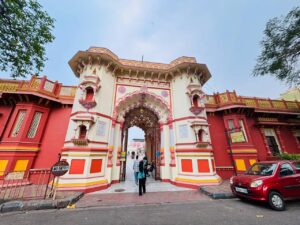
At the main gate, two sculpted lions stand on either side, almost as silent guardians. Just outside, you’ll also notice that the temple is recognized as a heritage site, which already hints at its importance and legacy.
First Impressions from the Entrance
The red entrance gate doesn’t prepare you for what lies inside. From outside, it feels like a normal structure. But once you walk in, the space opens up into a beautifully maintained complex.
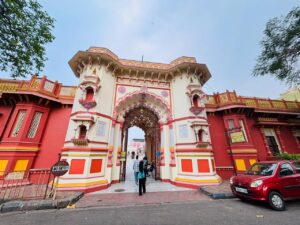
Wide pathways, gardens, and carefully placed statues create a peaceful transition from the busy streets to a spiritual setting.
Parasnath Jain Temple: A Touch of Rajasthan in Kolkata
The moment you step inside, it doesn’t quite feel like Kolkata anymore. The architecture, colors, and detailing give a strong impression of Rajasthan. The domes, arches, and ornamental designs create a royal atmosphere.
It’s not loud or overwhelming. Instead, the beauty reveals itself slowly—through carvings on pillars, patterned walls, and carefully crafted structures.
Gardens, Water, and Stillness
What truly sets this temple apart is the presence of nature within the complex.
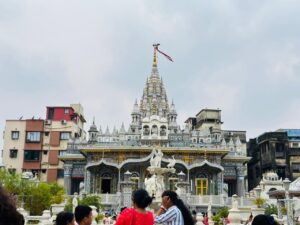
There are well-maintained gardens all around, with neatly arranged plants and open spaces where visitors often sit and relax. In the middle, you’ll find a water body with fountains and fish swimming peacefully.
During the evening, when the lights turn on and the fountains begin to flow, the entire place takes on a different charm. It becomes quieter, softer, and even more beautiful.
Architecture That Feels Like Art
Looking at your photos, one thing stands out clearly—the level of detailing.
This temple isn’t just built, it’s crafted.
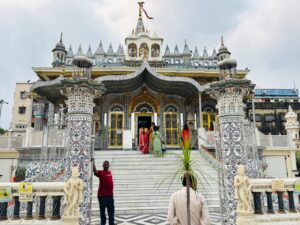
- Mirror work and glass mosaics reflect light beautifully
- Marble pillars carry intricate carvings
- Colorful patterns give it a slightly European touch mixed with traditional Jain design
The temple was built in 1867 by Rai Badridas Bahadur Mookim, and even today, it feels well preserved and alive.
Every corner looks like someone spent time thinking about aesthetics, not just structure.
Details That Capture Attention
If you take your time here, you’ll start noticing small details that many people might miss:
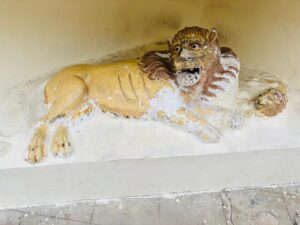
- Stone carvings on pillars and walls
- Decorative statues, including elephants and royal figures
- Crystal and glass work that reflects light beautifully
- A large clock and ornamental patterns on the upper sections
Everything feels carefully designed. Nothing looks rushed or random.
A Place of Discipline and Devotion
Visitors are required to remove their shoes before entering the temples, maintaining the sanctity of the space. Photography inside the temples is not allowed, which helps preserve the peaceful environment.
Devotees come here regularly for prayers and rituals, while others visit simply to experience the beauty and calmness.
Parasnath Jain Temple: Individual Temples Within the Complex
Each temple within the complex has its own character:
- The main Parasnath temple is the central attraction
- The Dadaji Temple stands out with its grand entrance
- The Mahavir Swami Temple is slightly smaller but equally detailed
- The Chandraprabhu Temple appears older and carries a more traditional feel

Parasnath Jain Temple in Kolkata
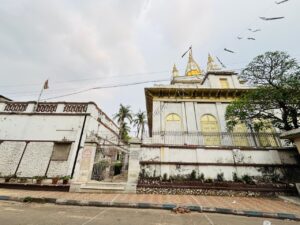
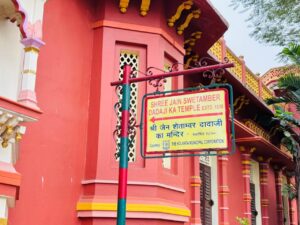

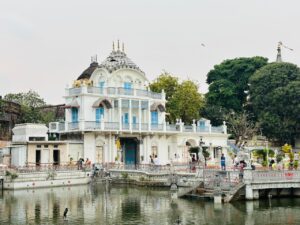
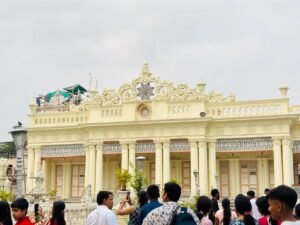
Despite their differences, all of them are connected through a shared sense of elegance and devotion.
Best Time to Visit
While the temple is beautiful throughout the day, visiting in the late afternoon or evening offers a better experience. As the sun sets and the lights come on, the architecture looks even more impressive.
The Main Temple and Spiritual Core
The main shrine draws most visitors.
Interestingly, the complex isn’t just one temple—it’s a group of temples dedicated to different Jain Tirthankaras. The main one is dedicated to Shitalanatha, while others honor Mahavira and Chandraprabha.
Devotees walk in quietly, often barefoot, maintaining a calm discipline. Even if you are not religious, the environment itself makes you slow down.
Related Article: West Bengal Launches Common Admission Portal for Polytechnic & ITI Admission 2026–27
The Overall Experience
What makes this place special is not just religion—it’s the combination of:
- Silence in the middle of a noisy city
- Artistic architecture that feels timeless
- A clean, well-maintained environment
- A sense of order and calm
Thousands of visitors come here every year to experience its beauty.
Is there an entry fee for Pareshnath Mandir?
No entry fee. The Pareshnath Jain Temple will appeal to culture and religious buffs. Allow about an hour to explore.
When was the Parasnath Mandir in Kolkata built?
In 1867. The Parasnath Jain Temple of Kolkata was built by Ray Badridas Bahadur in 1867. Thousands of people visit this temple annually.
How to visit Parasnath temple?
By Metro • Nearest metro stations: Belgachia or Shyambazar (Blue Line) • From either station, the temple is about 1.5–2 km • Take an auto or a short taxi ride (10–15 minutes) If you prefer walking, it’s doable from Shyambazar, but a bit long. By Train • Nearest railway station: Sealdah • Distance: around 4 km • From Sealdah, you can take: o Auto o Bus o Ola/Uber Travel time: 15–25 minutes, depending on traffic By Bus • Get down at Manicktala or Ultadanga • From there, take an auto to Gouri Bari Lane • The temple is just inside the lane By Car / Bike • Search on Google Maps: “Parasnath Jain Temple Kolkata” • Parking is limited near the entrance, so: • Better to park slightly away and walk • Avoid peak hours if driving Exact Location Area: Gouri Bari Lane, near Manicktala, North Kolkata Landmark: Close to Gouri Bari Durga Puja area