


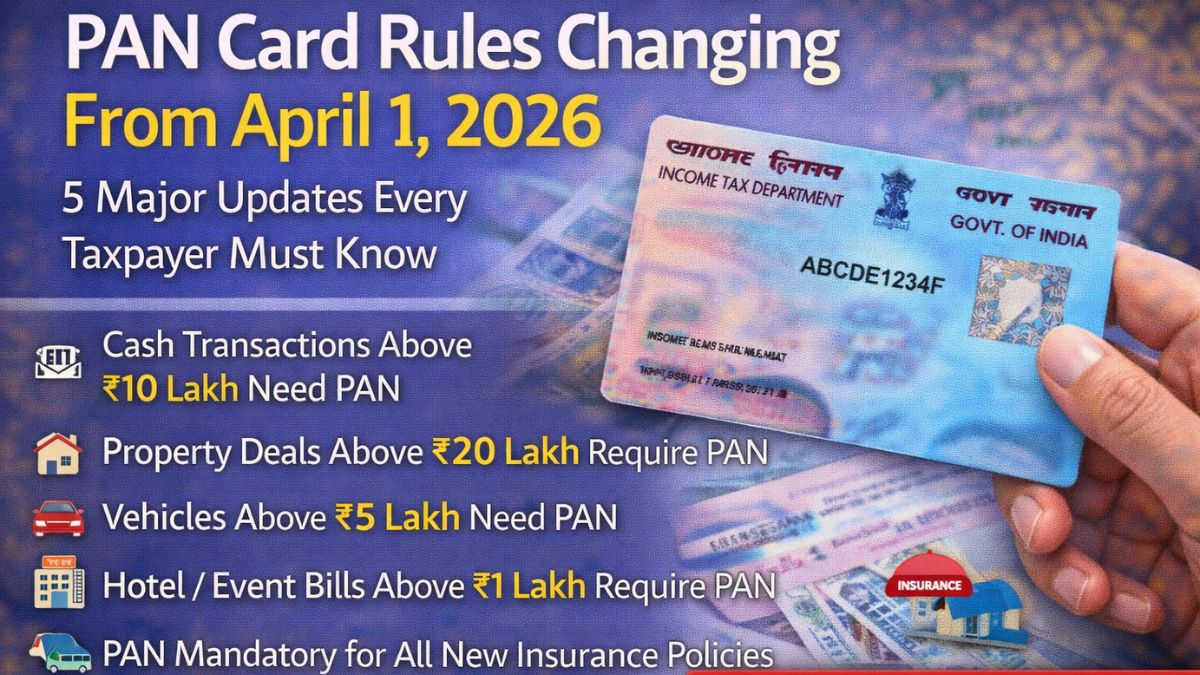
PAN Card Rules Changing from April 1, 2026: The Government of India just changed 6 major PAN card rules. Active from April 1, 2026. Most people will find out at the bank counter. Do not be one of them.
Several important changes related to the Permanent Account Number (PAN) system are expected to come into effect from April 1, 2026. These updates aim to strengthen transparency in financial transactions and improve compliance within India’s taxation system.
The new rules will impact activities such as bank transactions, property purchases, vehicle purchases, hotel spending, and insurance policies. Individuals who frequently engage in high-value transactions should be aware of these updates to avoid issues with financial compliance.
5 major PAN card updates that every taxpayer should know before April 2026: (PAN Card Rules Changing from April 1, 2026)
- Cash deposit and withdrawal
- Buying vehicles
- Hotel, event bills:
- Real estate
- Insurance
Here are key changes in PAN Card NEW Rules from April 1, 2026 you need to know in detail:
- PAN Required for Cash Transactions Above ₹10 Lakh Per Year
Under the updated rules, individuals making cash deposits or withdrawals exceeding ₹10 lakh in a financial year will need to provide their PAN details.
Earlier, the focus was mainly on daily cash transactions above ₹50,000, but the revised regulation shifts attention to the total yearly transaction value.
This change aims to improve the monitoring of large cash movements and reduce unreported financial activities.
- PAN Mandatory for Property Transactions Above ₹20 Lakh
Real estate deals above ₹20 lakh will now require PAN for both buyers and sellers.
Previously, the threshold for PAN reporting in property transactions was ₹10 lakh. The revised limit reflects changes in property prices and aims to ensure that large real estate transactions remain transparent.
- PAN Required for Vehicle Purchases Above ₹5 Lakh
Another significant update involves vehicle purchases.
For transactions exceeding ₹5 lakh, buyers must provide their PAN details.
For the first time, this rule may also apply to two-wheelers, which were previously not commonly included in such reporting requirements.
This step helps authorities monitor high-value purchases in the automobile sector.
- PAN Needed for Hotel Bills or Event Spending Above ₹1 Lakh
Spending on luxury hotel bills, banquets, or large events exceeding ₹1 lakh will now require PAN details.
Earlier, the limit for such transactions was ₹50,000. The revised threshold reflects changes in spending patterns and inflation while maintaining oversight of high-value hospitality expenditures.
- PAN Mandatory for All New Insurance Policies
One of the most notable changes is in the insurance sector.
From now on, every new insurance policy will require PAN information, regardless of the premium amount.
Previously, PAN was typically required only when the policy premium crossed certain limits. Removing the minimum threshold ensures better financial record tracking and prevents misuse of insurance products for unreported transactions.
Why These Changes Matter
The revised PAN rules are aimed at improving financial transparency and ensuring that large transactions are properly documented.
These updates will help authorities:
- Track high-value financial activities
- Reduce tax evasion and undisclosed income
- Improve the accuracy of financial reporting systems.
For individuals, keeping PAN details updated and available during transactions will become increasingly important.
Related Article: New Home Rent Rules 2026 in India | What Tenant and Landlord Rights Explained
Know More: https://www.incometax.gov.in/iec/foportal/
