


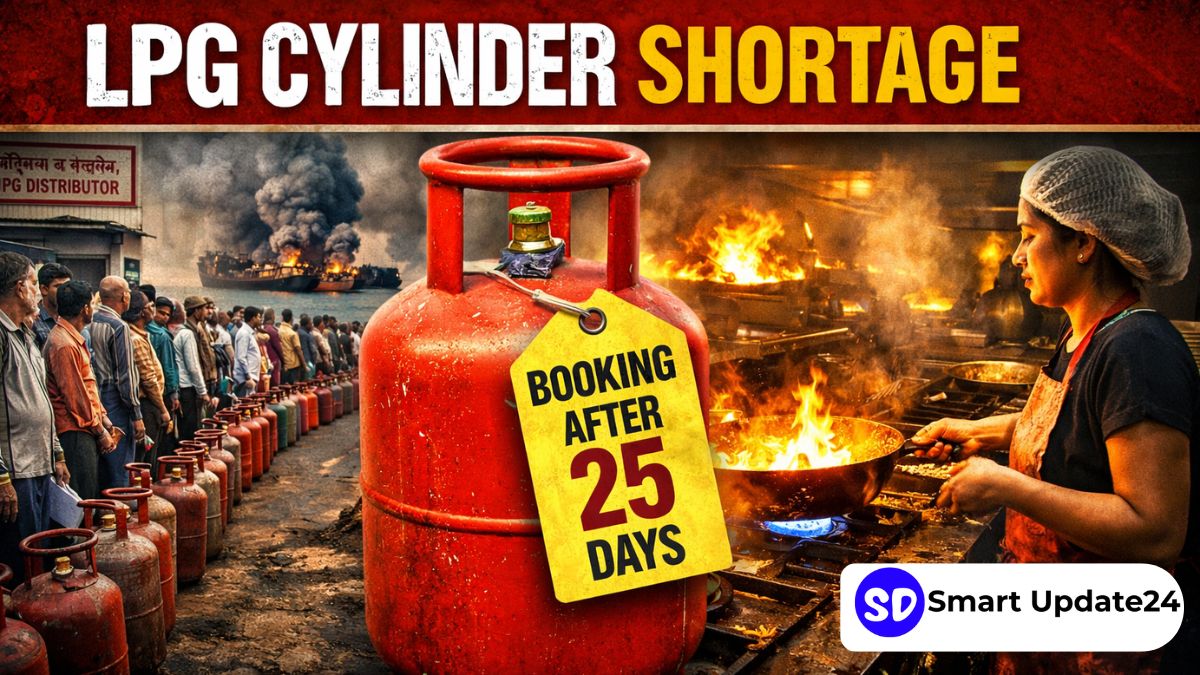
LPG Cylinder Shortage Live: India is witnessing widespread concern over a possible LPG cylinder shortage following disruptions in global energy supply routes linked to the ongoing West Asia conflict. While reports of long queues and delays have emerged from several cities, oil companies and the government have clarified that domestic LPG supply remains stable, and the restrictions are mainly aimed at controlling panic bookings and ensuring fair distribution.
Why Is There Concern About LPG Shortage?
The supply disruption is linked to geopolitical tensions in West Asia, particularly the closure of the Strait of Hormuz, a key maritime route through which a large portion of India’s LPG imports passes. Since India imports a significant share of its cooking gas from countries like Saudi Arabia and Qatar, any disruption in this route affects supply logistics.
Due to this uncertainty, many consumers across the country began panic booking LPG cylinders, which suddenly increased demand and overloaded booking systems run by oil marketing companies.
In several cities, residents reported for LPG Cylinder Shortage Live:
- Long queues outside LPG distributors
- Online booking failures or server errors
- Delayed cylinder deliveries
- Commercial gas shortages are affecting restaurants
Authorities say these problems are largely due to panic demand rather than an actual nationwide shortage.
Related Article: LPG Booking Rule Changed 2026 | Customers Must Wait 25 Days to Book Next Gas Cylinder
HPCL and Government Advisory: Book Refills After 25 Days
To manage supply and avoid unnecessary stockpiling, oil companies, including HPCL, IOCL, and BPCL, have revised LPG refill booking rules.
New LPG Refill Rules
| Category | Minimum Gap for Booking Refill |
|---|---|
| Urban domestic consumers | 25 days |
| Rural consumers | 45 days |
| Delivery cycle | Unchanged |
Earlier, households could book a refill after 21 days, but the waiting period has now been extended to manage demand.
Officials have appealed to citizens not to panic and book cylinders, assuring that household cooking gas supplies are being prioritised.
Related Article: Aadhaar New Update Rules 2026 | UIDAI Simplifies Online Correction Process for Citizens
Restaurants and Hotels Hit Hard
While domestic supply is protected, commercial LPG supply has been restricted, which has affected restaurants, street food stalls, and catering businesses.
Reports from several cities show that:
- Restaurants are receiving only around 20% of their usual LPG allocation.
- Some eateries have reduced menu items due to limited gas supply.
- A few restaurants have switched to firewood or electric cooking appliances to continue operations.
In cities such as Mumbai, Bengaluru, and Kolkata, hospitality associations warned that many small eateries may struggle to operate if supply delays continue.
Panic Booking Causing Long Queues
Across parts of India, consumers rushed to gas agencies fearing a shortage. This surge in bookings led to:
- Server crashes in LPG booking systems
- Crowds outside gas agencies
- Delivery delays in several districts
Authorities emphasised that there is sufficient stock for domestic households, and panic buying is only creating unnecessary disruption.
Impact on Transport and Daily Life
The LPG situation has also had ripple effects beyond households:
- Some autorickshaws running on LPG fuel stopped operating in certain regions due to irregular supply.
- Street food vendors and small restaurants reported difficulties in cooking popular items.
- Sales of induction cooktops and electric appliances surged sharply as people looked for backup cooking options.
Government Response to the Crisis
The central government has taken several steps to stabilise supply:
- Refineries ordered to increase LPG production by around 10%
- Domestic household supply given top priority
- Monitoring teams deployed to prevent hoarding and black marketing
- Limited allocation of LPG to commercial users
Officials also said that petrol and diesel supplies remain unaffected, as India has sufficient refining capacity and reserves.
Key Takeaways
- Domestic LPG supply in India is currently stable.
- Consumers in urban areas must wait 25 days before booking the next refill.
- Rural consumers may face a 45-day gap for refills.
- Restaurants and commercial establishments are facing the biggest impact due to limited LPG allocation.
- Authorities are urging citizens not to panic-buy cylinders.
Bottom line: Despite fears of a nationwide shortage, the government says household cooking gas supply is secure. The new booking rules and restrictions are mainly meant to control demand and ensure that LPG reaches all consumers fairly.
FAQ: LPG Cylinder Shortage Live in India 2026
1. Is there really an LPG cylinder shortage in India?
No. According to oil marketing companies like HPCL, IOCL, and BPCL, domestic LPG supply is currently stable. The concern arose mainly due to panic booking and increased demand in several cities.
2. Why are people talking about an LPG shortage?
The concern started after global supply disruptions linked to tensions in West Asia and the Strait of Hormuz, which is a major route for oil and LPG shipments. This triggered panic booking among consumers.
3. What is the new LPG refill booking rule?
Oil companies have increased the gap between refill bookings.
| Category | Refill Booking Gap |
|---|---|
| Urban households | 25 days |
| Rural households | 45 days |
This rule is meant to prevent panic bookings and ensure fair distribution of cylinders.
4. Are restaurants and hotels affected by the LPG supply issue?
Yes. Many restaurants and hotels rely on commercial LPG cylinders, and reports suggest they are receiving limited supply. Some eateries have reduced menu items or switched to alternative cooking methods.
5. Will LPG cylinder prices increase due to this situation?
As of now, there has been no official announcement of a price increase related to the supply concern. Prices may depend on global crude oil trends.
6. Are LPG deliveries delayed in some areas?
Yes, some cities have reported delays in delivery and long queues at gas agencies, mainly due to sudden high booking demand rather than a real shortage.
7. What should consumers do during this situation?
Consumers are advised to:
- Avoid panic booking
- Book cylinders only when needed
- Follow the 25-day refill booking rule
8. Is the government taking any action?
Yes. The government and oil companies have taken steps such as:
- Increasing LPG production at refineries
- Prioritising the domestic household supply
- Monitoring distributors to prevent hoarding.
