





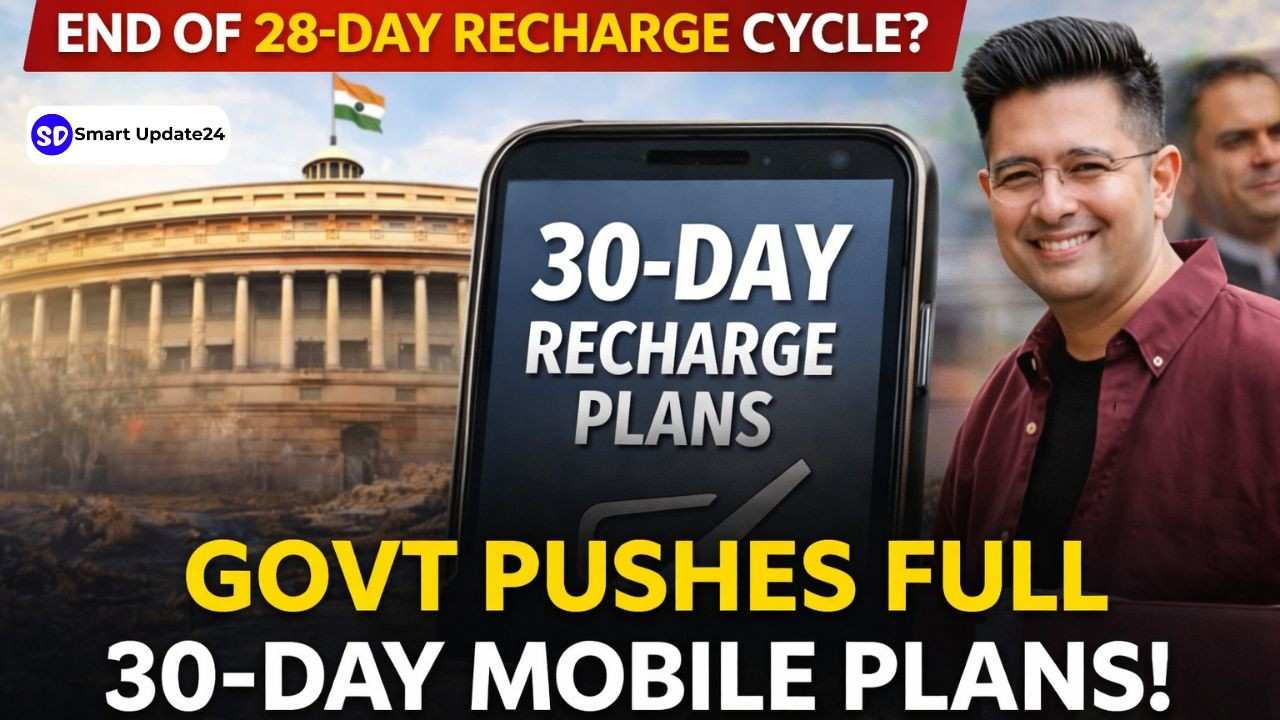
End of 28-Day Recharge: In a move that could bring long-awaited relief to millions of mobile users across India, the government has directed telecom operators to introduce proper 30-day recharge plans, replacing the widely criticized 28-day billing cycle.
A major relief for mobile users as the government has directed telecom companies to introduce proper 30-day recharge plans, putting an end to the long-standing confusion around the 28-day cycle. For years, users felt they were unknowingly paying for extra recharges in a year, and this change is expected to improve transparency, simplify billing, and offer better value to consumers across the country.
The issue gained attention after it was raised in Parliament, highlighting how the 28-day system placed an unfair burden on millions of users. The push for clearer and more consumer-friendly pricing has now resulted in this positive step.
While it may seem like a small change, it will make a meaningful difference for everyday mobile users, ensuring greater fairness and convenience over time.
End of 28-Day Recharge: Why the 28-Day Recharge System Was Controversial
For years, telecom users have been recharging their mobile plans every 28 days. While it may seem like a minor difference, the impact over a year is significant.
- A 28-day cycle results in 13 recharges per year
- A true monthly plan requires only 12 recharges annually
This effectively meant users were paying for an extra recharge every year, increasing their overall mobile expenses without realizing it.
Issue Raised in Parliament
The matter gained national attention after it was highlighted in Parliament by Raghav Chadha.
He pointed out that the 28-day recharge model created unnecessary financial pressure on users and called for a more transparent and consumer-friendly system.
Following this, the government took note and moved towards implementing a fairer structure.
End of 28-Day Recharge: What the New 30-Day Rule Means
Under the new directive:
- Telecom companies will need to offer plans with a full 30-day validity
- Users will benefit from clear monthly billing cycles
- The confusion around recharge dates will be eliminated
This change aims to align telecom billing with standard calendar months, making it easier for users to manage expenses.
Impact on Consumers
The shift to 30-day recharge plans is expected to:
- Reduce annual spending on mobile recharges
- Improve billing transparency
- Increase consumer trust in telecom pricing
- Simplify plan management for users
While it may appear to be a small correction, the long-term financial benefit for millions of users is substantial.
Will Telecom Companies Fully Adopt It?
Although the directive has been issued, the implementation will depend on how quickly telecom providers roll out these revised plans.
Industry experts believe that companies may gradually introduce 30-day options alongside existing plans before fully transitioning.
A Step Toward Consumer-Friendly Telecom Policies
This move signals a broader shift toward consumer-centric reforms in India’s telecom sector. By addressing a long-standing concern, the government has taken a step toward ensuring fairness and transparency in everyday services.
For mobile users, this could finally mean the end of the “28-day recharge trap.”
Related Article: Earth Hour 2026 | India Gate to Victoria Memorial Goes Dark as Millions Join Global Climate Movement (From Delhi to Kolkata)
Telecom Companies Wiki: https://en.wikipedia.org/wiki/List_of_telecom_companies_in_India