





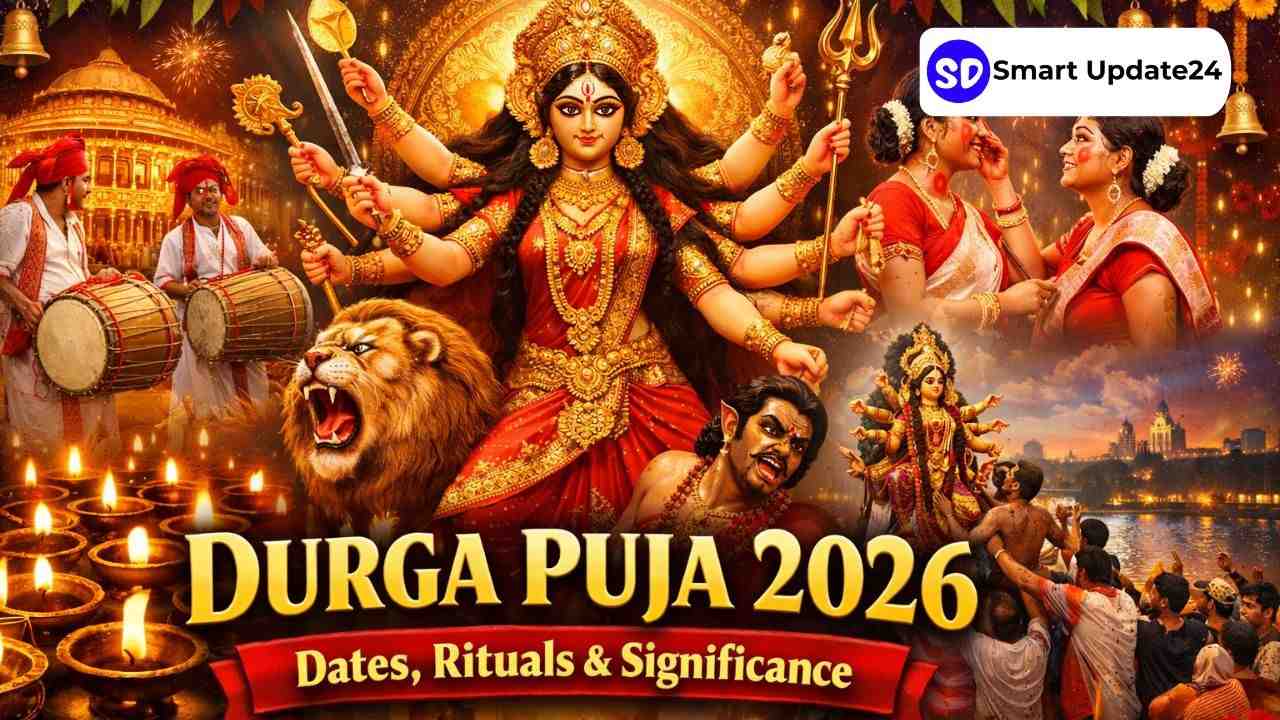
Durga Puja 2026: Durga Puja is the biggest festival in West Bengal and one of the most celebrated Hindu festivals in India. It marks the victory of Goddess Durga over Mahishasura and symbolizes the triumph of good over evil. In 2026, Durga Puja will be celebrated with great devotion, cultural vibrancy, and grand pandals across Kolkata and beyond.
Durga Puja 2026 Dates (Tentative Calendar)
Durga Puja follows the lunar calendar, so dates vary each year. For 2026, the expected schedule is:
| Occasion | Date (2026) | Day |
|---|---|---|
| Mahalaya | 8 October | Thursday |
| Panchami | 20 October | Tuesday |
| Shashthi | 21 October | Wednesday |
| Saptami | 22 October | Thursday |
| Ashtami | 23 October | Friday |
| Navami | 24 October | Saturday |
| Dashami | 25 October | Sunday |
Note: Dates are based on traditional calculations and may slightly vary depending on the Panchang.
Importance of Each Day
Mahalaya – Invocation of Goddess Durga
- People perform Tarpan for ancestors
- The iconic recitation of Mahishasura Mardini is broadcast
- It signifies Goddess Durga’s journey to Earth
Panchami & Shashthi – Arrival of the Goddess
- Pandals open for public viewing
- Bodhan ritual is performed to awaken Goddess Durga
- Festive atmosphere begins across cities
Saptami – Nabapatrika Snan
- Early morning ritual called Nabapatrika Snan
- The banana plant symbolizing the Goddess is bathed in the river
- Formal beginning of main puja rituals
Ashtami – The Most Sacred Day
- Pushpanjali (flower offering) by devotees
- Kumari Puja in some places
- Sandhi Puja between Ashtami and Navami (very important)
- Bhog (Khichuri, Labra, Payesh) served
Navami – Final Worship
- Grand aarti and dhunuchi dance
- Final offerings to Goddess Durga
- Cultural programs and peak crowd
Dashami – Farewell (Visarjan)
- Sindoor Khela by married women
- Emotional farewell to the Goddess
- Idol immersion (Visarjan) in rivers
Best Time for Visitors
| Activity | Best Time |
|---|---|
| Pandal Hopping | Evening to late night |
| Pushpanjali | Morning (Ashtami) |
| Photography | Night (lighting & crowds) |
| Cultural Programs | Navami evening |
Key Ritual Timings (General)
While exact timings depend on Panchang, here are typical पूजा slots:
- Morning rituals: 6:00 AM – 9:00 AM
- Pushpanjali (Ashtami): Around 8:00 AM – 10:00 AM
- Sandhi Puja: Around transition of Ashtami–Navami (48 minutes window)
- Evening Aarti: 6:30 PM – 8:30 PM
For accurate timing, people usually follow local temple or puja committee schedules.
Durga Puja 2026 – Overview Chart (Complete Snapshot)
Cultural Significance
Durga Puja is not just a religious festival; it is a complete cultural celebration:
- Artistic pandals with unique themes
- Traditional music with dhak drums
- Street food and night-long celebrations
- Fashion, shopping, and gatherings
- Community bonding
In Kolkata, Durga Puja is also recognized by UNESCO as an Intangible Cultural Heritage.
What Makes Durga Puja Special in Kolkata
- Thousands of themed pandals across the city
- Massive footfall and tourism
- Iconic locations like Bagbazar, Kumartuli, College Square, and Salt Lake
- Night-long crowd and lighting displays
Related Article: IPL 2026 Ticket Booking: RCB vs SRH, Mumbai Indians vs KKR – Ticket Prices & How to Book Online
Conclusion
Durga Puja 2026 will once again bring devotion, joy, and cultural energy across West Bengal and India. From Mahalaya’s spiritual start to Dashami’s emotional farewell, each day carries deep meaning and tradition.
If you plan to experience it, Kolkata remains the heart of the celebration, where every street turns into a festival.
FAQs -Durga Puja 2026
1. When is Durga Puja in 2026?
Durga Puja will be celebrated from 21 October to 25 October 2026, with Mahalaya on 8 October 2026.
2. Which day is most important during Durga Puja?
Ashtami (23 October 2026) is considered the most sacred day. Devotees offer pushpanjali and participate in Sandhi Puja.
3. What is Mahalaya and why is it important?
Mahalaya marks the beginning of Devi Paksha. On this day:
- People perform rituals for ancestors (Tarpan)
- Goddess Durga is invoked to descend to Earth
4. What happens on Dashami (Bijoya Dashami)?
Dashami is the final day:
- Married women play Sindoor Khela
- Idols of Goddess Durga are immersed (Visarjan)
- People greet each other with “Shubho Bijoya”
5. What are the main rituals of Durga Puja?
Key rituals include:
- Bodhan (invocation of Goddess)
- Nabapatrika Snan (Saptami ritual)
- Pushpanjali (flower offering)
- Sandhi Puja (between Ashtami and Navami)
- Dhunuchi Naach (devotional dance)
6. What are the typical timings of Durga Puja rituals?
- Morning Puja: 6:00 AM – 9:00 AM
- Pushpanjali: 8:00 AM – 10:00 AM
- Sandhi Puja: Specific 48-minute window
- Evening Aarti: 6:30 PM – 8:30 PM
(Timings may vary by location and Panchang)
7. Why is Durga Puja famous in Kolkata?
Kolkata is known for:
- Grand themed pandals
- Artistic idols
- Night-long celebrations
- Cultural programs and food
8. What food is served during Durga Puja?
Traditional bhog includes:
- Khichuri
- Labra (mixed vegetable curry)
- Beguni
- Payesh (rice pudding)
9. What should visitors wear during Durga Puja?
- Traditional outfits like saree, kurta, or ethnic wear
- Comfortable clothes and shoes for pandal hopping
10. Is Durga Puja a public holiday?
Yes, Durga Puja (especially Saptami to Dashami) is a major public holiday in West Bengal and many parts of India.
11. What is the significance of Goddess Durga?
Goddess Durga symbolizes:
- Power and protection
- Victory of good over evil
- Strength and divine energy
12. How long does Durga Puja last?
The main festival lasts 5 days (Shashthi to Dashami), but celebrations begin from Mahalaya.