




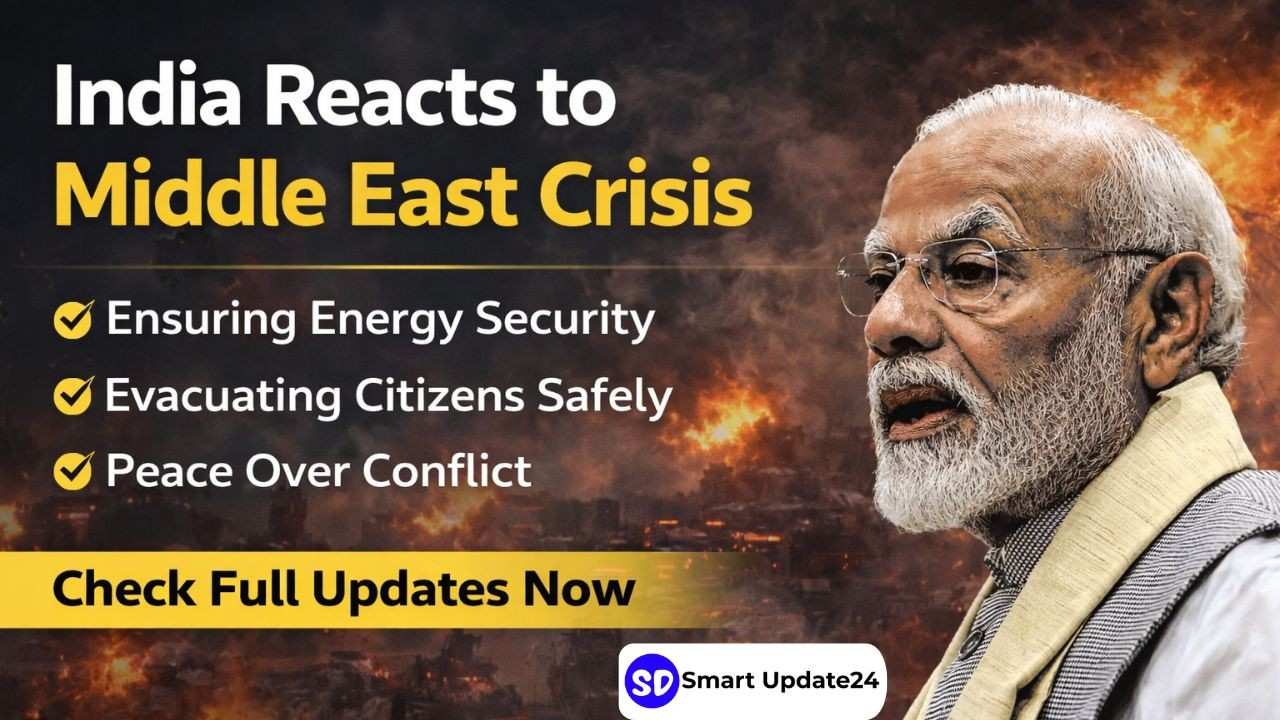
West Asia Conflict 2026: Citing sources, PTI reported that Prime Minister Narendra Modi will chair a high-level meeting on Sunday evening. During this meeting, India’s energy preparedness will be reviewed amidst rising tensions in the Middle East. Senior ministers will assess the current situation across the petroleum, power, and fertilizer sectors.
The primary objective of this meeting will be to ensure an uninterrupted energy supply, stable logistics, and efficient distribution across the country.
Officials stated that, amidst the ongoing crisis, continuously monitoring global developments remains a priority in order to safeguard the interests of consumers and industries.
On March 12, PM Modi remarked that the ongoing conflict in West Asia has triggered a global energy crisis. He described it as a “stern test of national character” and emphasized that dealing with this situation requires peace, patience, and greater public awareness.
West Asia Conflict 2026 OVERVIEW:
The Prime Minister also underscored that the government is working continuously to address disruptions in international supply chains. He stated, “Continuous efforts are being made to determine how we can effectively tackle the disruptions that have emerged within the supply chain.”
This conflict, now in its third week, began on February 28 following attacks launched by the US and Israel against Iran. Since then, the conflict has escalated further, with Iran launching retaliatory strikes against Israel and several neighboring countries in the Gulf region.
Due to Iran’s control over the ‘Strait of Hormuz’—a critical global maritime route for energy supplies—shipping movements have been significantly impacted, and only a limited number of vessels are currently being permitted to pass through. As a result of this blockade, energy supplies to several nations, including India, have been disrupted.
Since the onset of the conflict, Prime Minister Narendra Modi has held telephonic conversations with numerous global leaders, including those from Saudi Arabia, the UAE, Qatar, Bahrain, Kuwait, Jordan, France, Malaysia, Israel, and Iran.
As tensions escalate in the Middle East, India has taken a balanced yet firm position, prioritizing national interest, energy security, and the safety of its citizens abroad.
The situation, especially involving disruptions linked to the Red Sea region, has raised global concerns over fuel supply chains and trade routes. India, being a major energy importer, is closely monitoring developments while taking proactive measures.
Read the full text of PM Modi’s speech in the Lok Sabha regarding the West Asia conflict.
Noting that this crisis has now persisted for over three weeks, and is having severe repercussions on the global economy and human lives, the Prime Minister emphasized the need for its earliest possible resolution. Underscoring the gravity of the situation, PM Modi stated, “The entire world is appealing to all parties to resolve this crisis as soon as possible.”
Elaborating on the challenges confronting India, the Prime Minister observed that this conflict has created pressures—on economic, national security, and humanitarian fronts—that were previously unimaginable.
Energy Security Becomes Top Priority (West Asia Conflict)
The ongoing crisis has impacted global oil and gas supply routes. However, India has reassured that:
- It continues to import energy from multiple countries, reducing dependency on any single region
- Strategic planning is in place to handle potential gas shortages
- Domestic production of energy resources is being strengthened
- Focus on alternative energy and supply diversification is increasing
These steps are aimed at ensuring that the country does not face a major fuel crisis despite global disruptions.
Strong Response to Red Sea Disruptions
The Red Sea route is a crucial global trade corridor. Any instability here affects shipping and fuel transportation worldwide.
India has made it clear that:
- Attacks on commercial routes are a serious concern
- Necessary actions will be taken to protect trade interests
- Maritime security and international cooperation remain key priorities
Safe Return of Indian Citizens (West Asia Conflict)
One of the major concerns during such conflicts is the safety of Indian nationals abroad.
The government has already:
- Facilitated the return of over 3 lakh Indians from affected regions
- Ensured evacuation through coordinated diplomatic and logistical efforts
- Continued monitoring to assist remaining citizens
Food and Supply Stability in India
Despite global uncertainty, India has maintained stability in essential supplies:
- Sufficient food grain reserves are available
- Supply chains within the country remain intact
- Government is prepared to handle any emergency situation
India’s Stand: Peace Over Conflict
India has clearly emphasized that:
- War is not a solution
- Dialogue and diplomacy are the only sustainable paths
- The country supports global peace and stability
This balanced stance reflects India’s approach of safeguarding its interests while promoting international cooperation.
Impact on Global Economy and India
The crisis may affect:
- Global oil prices
- Shipping costs
- Import-export dynamics
However, India’s diversified strategy and preparedness are expected to reduce major impacts on the domestic economy.
Related Article: PM Modi to Visit West Bengal | 3,250 Crore Development Push, Vande Bharat Sleeper Train and Major Rail Projects Announced
Know More: http://www.pmindia.gov.in/en/