




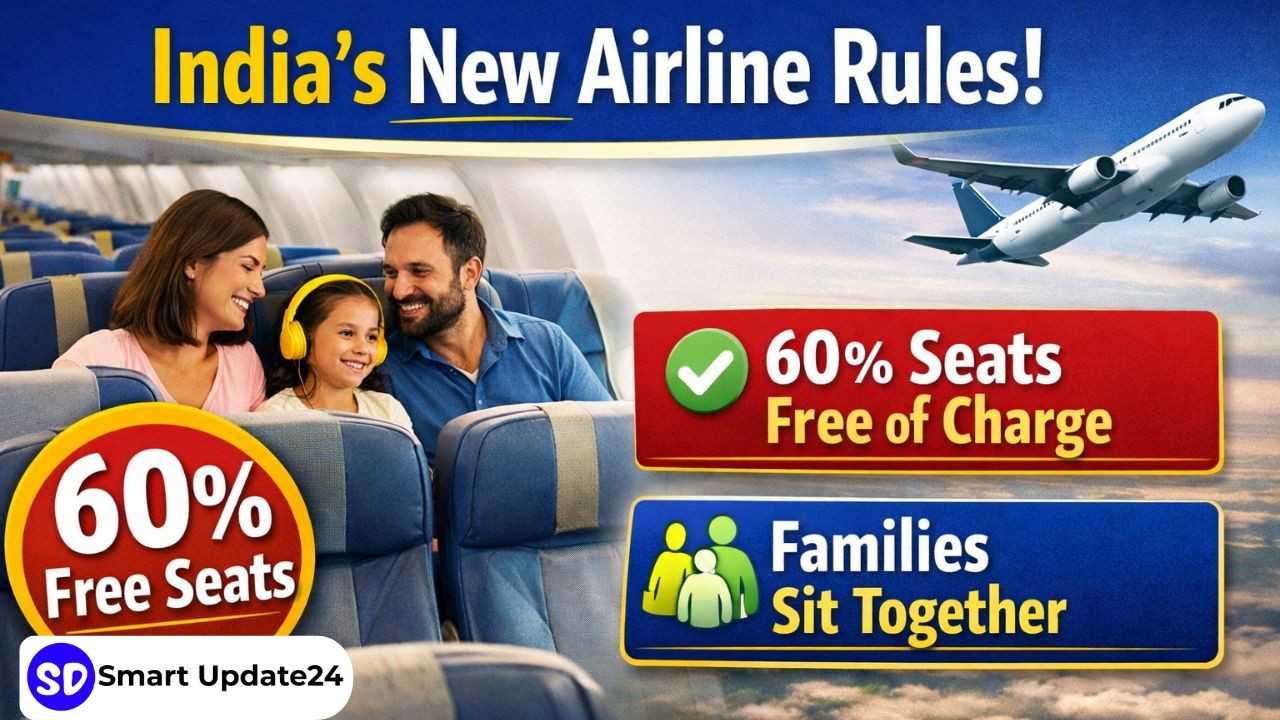
India Introduces New Airline Rules 2026: In a major relief for air travellers, the Government of India has announced a set of passenger-friendly aviation rules aimed at making flying more affordable, transparent, and convenient. The new directives, issued through the Directorate General of Civil Aviation (DGCA), will significantly change how airlines allocate seats and handle passengers.
Key Highlights of India Introduces New Airline Rules 2026
| Feature | Details |
|---|---|
| Free Seats Rule | Minimum 60% seats must be free of selection charges |
| Family Seating | Passengers on the same PNR must be seated together |
| Transparency | Airlines must clearly display passenger rights |
| Language Accessibility | Information must be available in regional languages |
| Extra Items | Easier rules for sports equipment & musical instruments |
60% Seats Must Be Free
The biggest change is that airlines are now required to offer at least 60% of seats on every flight without charging any seat selection fee.
This move directly addresses one of the most common complaints from passengers—paying extra for basic seat choices like window or aisle seats. The government aims to ensure fair access and reduce hidden costs in ticket pricing.
Related Article: Aadhaar Update 2026: How to Replace Father’s Name with Husband’s Name
Families and Groups Will Sit Together
Another major rule ensures that passengers booked under the same PNR (Passenger Name Record)—usually families or groups—are seated together, preferably in adjacent seats.
This is especially important for families travelling with children, who are often separated unless they pay extra fees.
Why the Government Made This Change
The decision comes after rising complaints about:
- Expensive seat selection charges
- Families are being split across the cabin
- Lack of transparency in airline pricing
The government says the new rules will make air travel more passenger-centric and affordable, especially during peak travel seasons when ticket prices surge.
More Passenger-Friendly Measures
Apart from seat allocation, the DGCA has also introduced additional reforms:
- Airlines must clearly inform passengers about their rights
- Information should be available in regional languages
- Simplified rules for carrying sports gear and musical instruments
- Stronger compliance and grievance systems
These steps are aimed at improving the overall travel experience and accountability.
Related Article: Yuva Sathi Payment Reject | Why -Rs. 1,500 Yuva Sathi started arriving -Who is receiving the money first?
Impact on Airlines
While passengers welcome the move, the new rule may impact airline revenues.
In fact, airline stocks like IndiGo and SpiceJet saw market reactions after the announcement, indicating concerns about reduced income from seat selection fees.
What It Means for Passengers
For travellers, this is a big win:
- No more forced payment for basic seats
- Families can travel comfortably together
- Better clarity on airline policies
- Overall, lower travel costs
Conclusion
The new aviation rules mark a major shift toward passenger rights in India’s aviation sector. By mandating free seat allocation and ensuring families sit together, the government has taken a strong step toward making air travel fairer, more transparent, and user-friendly.