


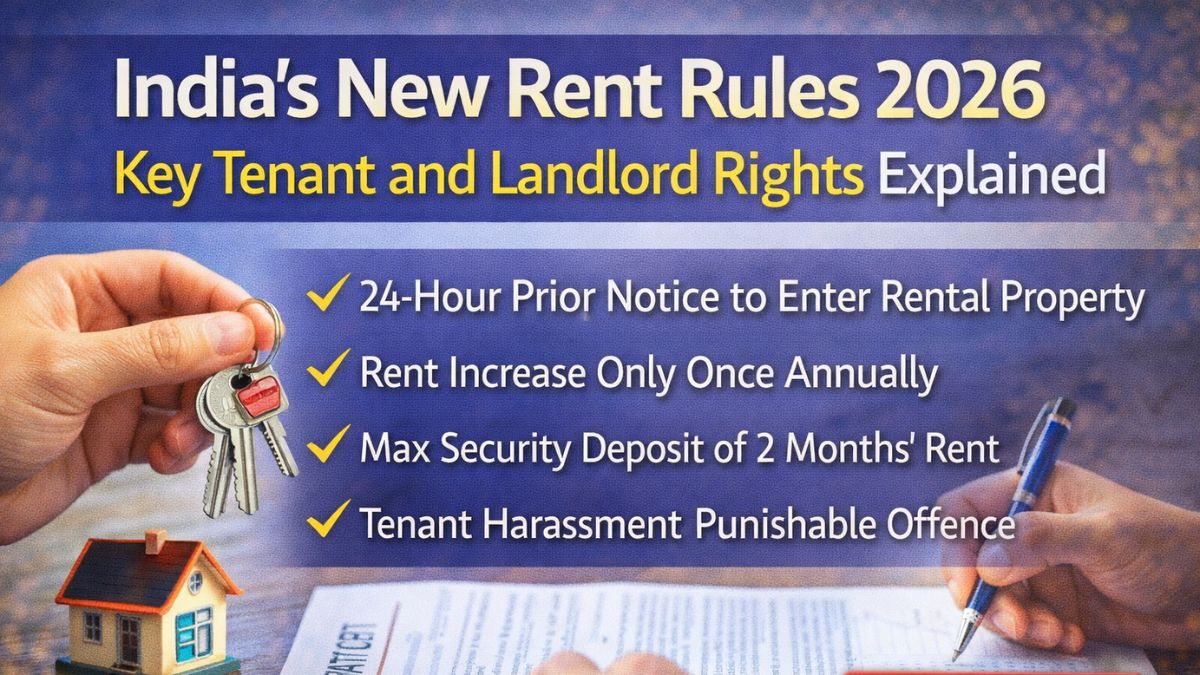
New Home Rent Rules 2026 in India: India is moving toward stronger tenant protection and more transparent housing practices with the New Rent Rules 2026. These guidelines aim to reduce disputes between landlords and tenants while ensuring fair practices in rental agreements.
India’s rental housing market is moving towards a formal and technology-based framework under the new Rent Rules 2026. The updated rules aim to strengthen digital compliance, strictly enforce deposit caps, expedite dispute resolution, and standardize rental practices across states. The center has asked states to upgrade property-registration portals, integrate police-verification systems, and ensure faster processing of tenancy records to bring more transparency to the rental ecosystem.
The new rules introduce important regulations regarding notice periods, rent increases, security deposits, and tenant rights, making the rental housing system more balanced for both parties.
Below are the major highlights of the new rental regulations (New Home Rent Rules 2026):
- 24-Hour Notice Before Entering a Rented Property
Under the new rules, landlords must provide at least 24 hours’ notice before entering a rented property.
This provision ensures that tenants have adequate privacy and are informed before any visit or inspection by the property owner.
- Rent Can Be Increased Only Once Every 12 Months
The regulations specify that rent can be increased only once in a year.
In addition, the landlord must provide a minimum notice of 90 days before implementing any rent hike. This rule is designed to prevent sudden and unfair rent increases.
- Security Deposit Limit Set to Two Months’ Rent
One of the major changes is the limit on security deposits.
Landlords cannot demand more than two months’ rent as a security deposit. This measure aims to reduce the financial burden on tenants when moving into a rental property.
- Tenants Cannot Be Evicted Without Legal Procedure
According to the rules, a landlord cannot forcibly evict a tenant without following the proper legal process.
This ensures that tenants are protected from sudden eviction and that disputes are handled through lawful channels.
- Rental Agreements Must Be Digitally Registered
All rental agreements must now include a digital stamp and formal registration within 60 days.
This step will help improve transparency and reduce fraudulent or informal rental arrangements.
- Repairs Must Be Addressed Within 30 Days
If landlords fail to carry out necessary repairs within 30 days, tenants have the right to arrange the repairs themselves.
The tenant may then deduct the repair cost from the rent, as per the rental agreement conditions.
- Harassment of Tenants Is a Punishable Offence
The new rules clearly state that landlords cannot harass tenants.
Actions such as:
- Locking the rented property
- Disconnecting the water or electricity supply
- Issuing threats or intimidation
are considered punishable offences under housing regulations.
Why These Rules Matter
The New Rent Rules 2026 aim to create a more balanced rental ecosystem across India.
They protect tenants from unfair treatment while also establishing clear responsibilities for landlords. With proper documentation, notice periods, and legal safeguards, both parties can avoid unnecessary disputes.
Related Article: Income Tax Rules 2026 explained: PAN, HRA, perks, and
Read More: https://en.wikipedia.org/wiki/Real_Estate_(Regulation_and_Development)_Act,_2016
