





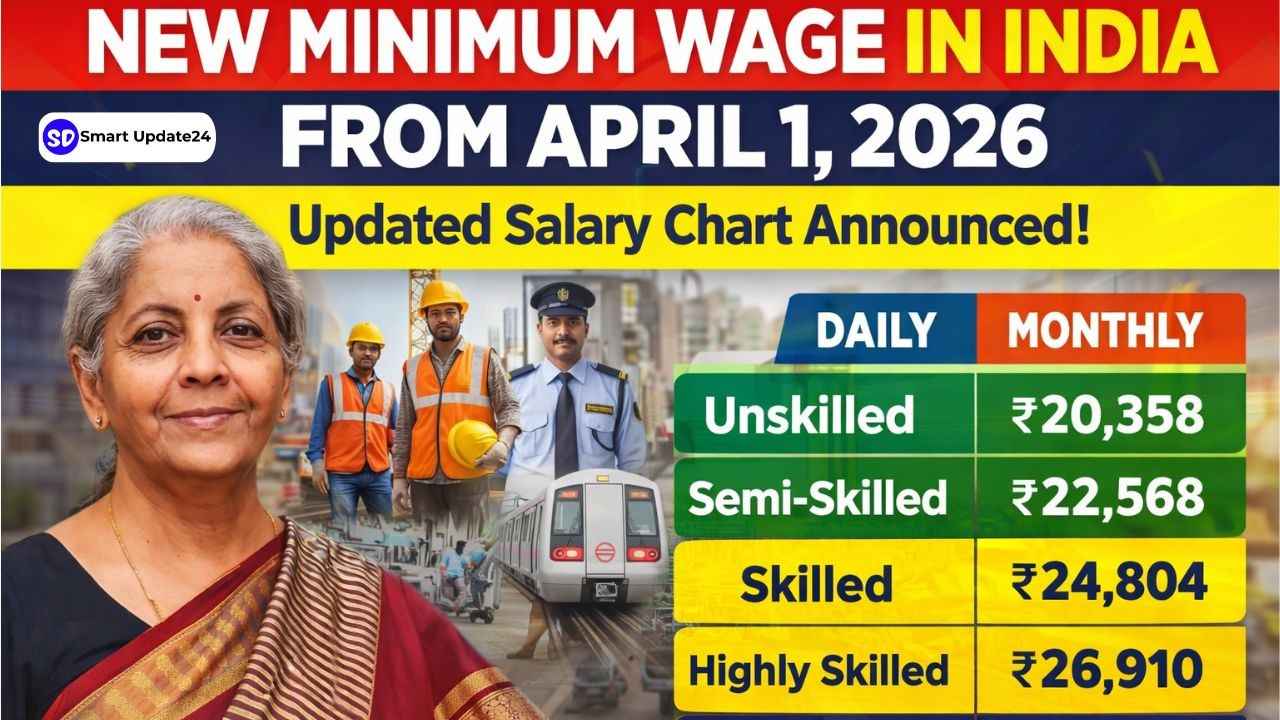
New Minimum Wages 2026 Increase in India (NEW Rates): The Central Government has introduced a revised minimum wage structure, which will come into effect from 1 April 2026. This update is expected to directly impact lakhs of workers employed in metropolitan cities across sectors such as construction, manufacturing, transport, and service industries.
Minimum wages are increasing across India from April 2026. New wage rates will come into effect nationwide, aiming to ensure fair pay across different worker categories.
- Unskilled workers will earn around ₹783 per day.
- Semi-skilled workers earn about ₹868 per day.
- Skilled workers earn around ₹958 per day.
- Highly skilled workers up to ₹1,035 per day.
This revision is designed to improve living standards and reduce wage gaps as costs of living rise.
All employers, both public and private, will be required to follow these updated rates from April 1, 2026. Higher wages mean better financial stability for millions. But also higher costs for businesses. A shift that impacts both workers and the economy.
The new wage framework revises daily and monthly earnings for workers based on their skill levels—ranging from unskilled to highly skilled categories.
Overview of New Minimum Wages Structure (2026) Increase in India (NEW Rates)
| Worker Category | Daily Wage (₹) | Monthly Wage (Approx ₹) |
| Unskilled | 783 | 20,358 |
| Semi-Skilled | 868 | 22,568 |
| Skilled | 954 | 24,804 |
| Highly Skilled | 1,035 | 26,910 |
These revised wages apply mainly to central sector workers and establishments operating in metropolitan areas.
Key Highlights
- Effective Date: 1 April 2026
- Applicable To: Workers under central government jurisdiction
- Coverage: Includes unskilled, semi-skilled, skilled, and highly skilled workers
- Focus Area: Primarily urban and metropolitan workforce
What This Means for Workers
The revised wages aim to:
- Improve the living standards of workers amid rising inflation
- Ensure fair compensation across different skill levels
- Provide a uniform wage benchmark for central sector employment
For example, a skilled worker will now earn approximately ₹24,804 per month, while a highly skilled worker could earn nearly ₹26,910 monthly.
Important Rule for Private Sector Employers
Private companies must comply with this update under the following conditions:
- If an organization currently pays less than the new minimum wage, it must increase salaries to meet the revised limit
- If wages are already higher, no reduction is allowed
However, in practice, many private organizations follow the state government’s minimum wages, which may vary.
New Minimum Wages 2026 Increase in India (NEW Rates): Central vs State Wage Difference
Although the central government has fixed these new rates:
- Most private sector wages are still influenced by state-specific minimum wage rules
- States may revise their wages separately based on local economic conditions
Impact on Industries
This wage revision is expected to impact:
- Construction and infrastructure sectors
- Manufacturing units
- Logistics and delivery services
- Security and facility management services
Employers in these sectors may see a rise in labor costs, while workers benefit from better income security.
FAQs
What is the new minimum wage from April 2026?
The revised wage starts at ₹783 per day for unskilled workers and goes up to ₹1,035 per day for highly skilled workers.
Who will benefit from the new wage structure?
Workers employed under the central government sectors, especially in metropolitan areas, will benefit.
Is this applicable to private companies?
Yes, private companies must ensure wages are not below the revised minimum threshold.
Will wages vary by state?
Yes, states may have their own minimum wage rules, which can differ from central rates.
Additional FAQs on Labour Codes (As on 16.03.2026): Download PDF
Related Article: Aadhaar Card on WhatsApp: Step-by-Step Guide to Download Your Aadhaar via WhatsApp